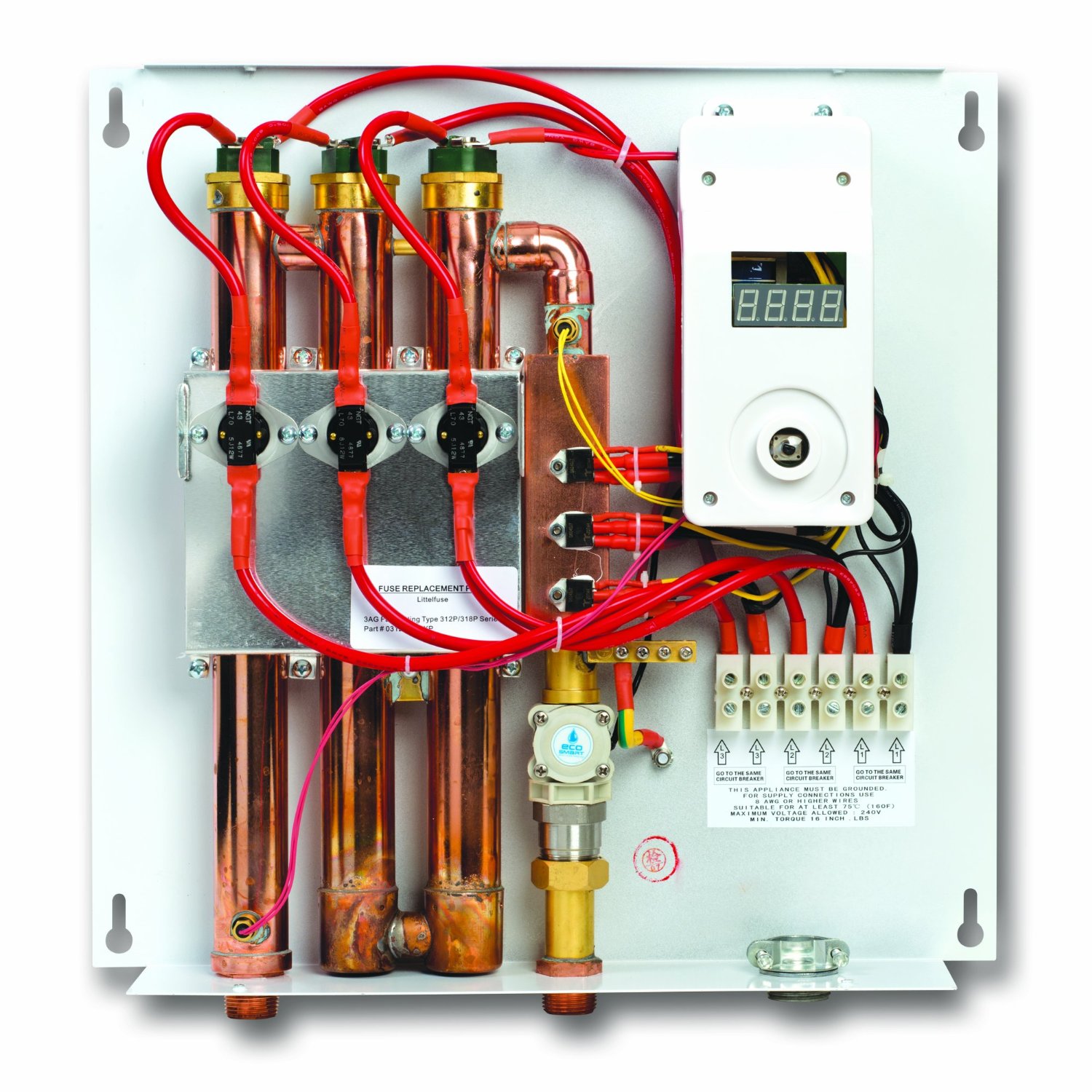
How do they work?
These types of devices heat water directly without the use of a storage tank. When a hot water faucet is turned on, cold water passes through a pipe into the unit and then a gas burner or electric thermostat heats it.
As a result, we have to provide a constant supply, usually at a rate of 7.6-15.2 liters per minute. Keep in mind that gas models produce higher liquid flows than electric models.
Advantages and disadvantages
For homes that use 156 liters or less of hot water per day, electric instant water heaters can be 24%-34% more efficient than conventional ones.
Similarly, they can achieve even greater energy savings of 27%-50% if you install one on every outlet.
With respect to cost, you should know that it is a little higher than a conventional hot tub, but it will last you much longer and have lower operating and energy costs, which could offset its higher purchase price. Most of them have a life expectancy of over 20 years.
Selecting a Demand Water Heater
Before you buy one, consider the following:
- Size
- Fuel type and availability
- Energy efficiency (energy factor)
- Costs
Installation and maintenance
The proper installation and maintenance of your horizontal electric flask could optimize its energy efficiency and will depend on many factors.
These include fuel type, climate, local building code requirements, and safety issues, especially as they relate to the combustion of gas-fired water heaters.
It is best to hire an expert to do the installation, but if you are going to do it yourself, then consult the manufacturer, as they usually have the necessary installation and instruction manuals.
Electric storage water heaters
An electric storage water heater consists of an insulated storage tank, usually cylindrical, where hot water is kept ready for use.
It is stored at a pre-set temperature of 60-80°C and is heated in the storage tank by one or more electrical resistance elements.
Over time, the temperature of the water decreases due to heat losses from the accumulator and the hot liquid outlets (usage). The result is that it is filled with cold water, which in turn reduces the total temperature in the tank.
Instant electric water heaters
Instantaneous heaters, where water is heated on demand and not stored, are designed to provide a constant stream of warm water for a bath, sink or shower.
Each time a tap is opened, the liquid will be instantly heated by electricity and then flow to the tap.
Solar and heat pump water heaters
Heavy-duty electrical elements can also be key components of solar water heaters and heat pump models.
They will provide an increase in temperature through radiation or the heat of the air.
Consider the capacity
Most water heaters are sold on a per-gallon basis, however, it is more important to consider the first-hour rating (FHR) for storage-tank water heaters and the gallons per minute (GPM) rating for tankless models.
This way you will know how much hot water you can supply.
Types of water heaters
Depending on the amount of hot water you use and how you are heating it (gas, oil, electricity), there are several options.
Some models claim to be energy efficient, but their initial costs are higher. Let’s take a closer look at them:
Heater with storage tank
These models are the most common. As their name suggests, they have an insulated tank in which the liquid is heated and stored until needed.
They also have a temperature and pressure relief valve that opens if either exceeds a pre-set level.
Tankless Heater
Instead of storing water, these radiators use heating coils to heat the water as you need it.
They are more energy-efficient than a storage-tank, but provide only a limited flow of hot water per minute, about 3.5 gallons.
Heat Pump Water Heater (Hybrid)
They capture heat from the air, transfer it to water and use approximately 60% less energy than standard electric models; they do not work well in very cold spaces and need to be placed in an area that remains 40 to 90 degrees.
And because the heat pump is at the top, a hybrid water heater will need up to 7 feet of clearance from the floor to the ceiling. It will also need up to 1,000 cubic feet of uncooled space to capture enough heat from the air.
Solar Water Heater
A roof-mounted cell absorbs the heat from the sun and transfers it to an antifreeze fluid in a closed-circuit system that goes to the water tank.
The best offer savings in the summer, making them attractive for hot, sunny regions.
Condensation water heater
Condensation radiators are an option if you heat with gas and need a unit with a capacity of more than 55 gallons.
These models have a tank like a conventional heater, but capture the exhaust gases that would normally come out the chimney.
They are then blown through a coil at the base of the unit, where the incoming cold water can absorb most of the heat.
Features to consider
- Warranty: Coverage for most water heaters is usually 3-12 years. Choose a model with the longest warranty available.
- Anti-fouling devices: Although incrustations can shorten the life of the thermos, you don’t have to invest in fancy features to get a long-lasting thermos.
- Brass drain valves vs. plastic drain valves: Look for brass valves that are more durable than plastic ones.
- Glass-lined tanks: These are designed to reduce corrosion.
- Digital displays: Some models will help you set up a vacation mode, while others will only display temperatures along with pressure readings.
Difference between Tank and Tankless Heaters
The size of the heating elements
A key advantage of water heaters with a tank of more than 50 liters is that the heating elements can be quite small.
Because a significant volume of water is stored and because the tank remains stratified as the hot element is removed, a storage radiator can provide the needs of an entire family without requiring a very large flow of gas or electricity.
Challenges of Tankless Electric Heaters
A tankless model large enough to serve an entire house requires a large current draw and most homes have only 200 amps of service and the multiple circuit breakers and wiring required for such large current flows are expensive.
For the utility companies, the idea of many customers switching to electric tankless water heaters is downright frightening, as loads fall off during the morning and early evening peak energy periods.
Increased maintenance
In addition to the questionable economics, tankless boilers have significantly higher maintenance requirements.
And in places with hard water, scale buildup is a significant problem. If the hardness is greater than 11 grains per hour, experts will recommend that you install a softener.
What do you really want?
In a survey, it was determined that most people don’t want to have to wait for 5 liters of hot water, or for the warm liquid to disappear in the middle of a delicious shower.
The risk factor
Many of the companies that sell these types of accumulators come and go. When they are there, they sell a lot of units, but when they are gone, they leave people without service or warranty.
The exaggeration factor
Tankless electric water heaters have long been over-sold and in many cases, consumers have been seduced by their many benefits without considering the exaggerated costs on the electricity bill.
Flexibility
With these thermoses, it is more than possible for you to take a shower and your husband to do the dishes at the same time, which will give you the flexibility to multitask with warm water at the same time.

About Zoryham
Zoryham is a Political Scientist who has been a freelance writer and radio broadcaster for several years. Her niches include Music, Wellness, Healthy Lifestyle, Yoga, Personal Development, Animals and Product Reviews. When Zoryham is not writing, you can find her listening to a Rolling Stones album, her favorite band.